Post: The Children’s Room

The Children’s Room

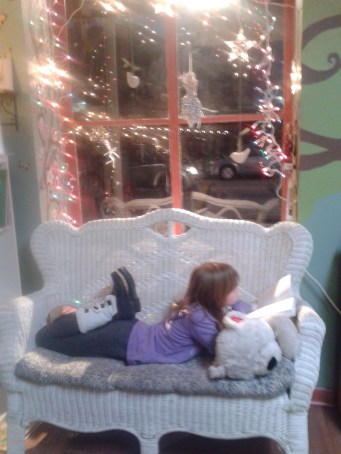
20151204_170830

Reading books should be joyful.

A friend told me once that she has spent her professional life working with children’s literature  because when she was a little girl she was very self conscious of a slight physical disfigurement that she didn’t know if anyone else except her shared. Then one day, her fourth grade teacher handed her a book she had never read, an old-fashioned story about a boy during the American Revolution. As she read, she realized that the main character had the exact same disfigurement that she did. And she no longer felt alone.

Now my friend spends her days making sure that books get to the kids who need them. She is a children’s librarian.
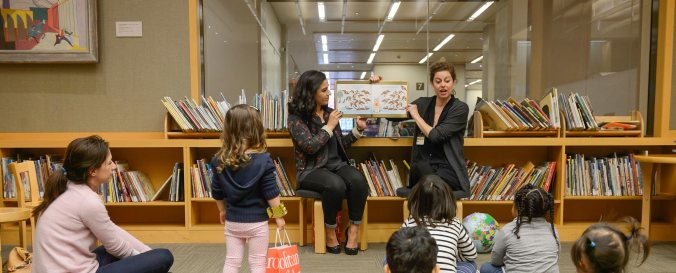
Storytime and Toddler Storytime_marquee.jpg

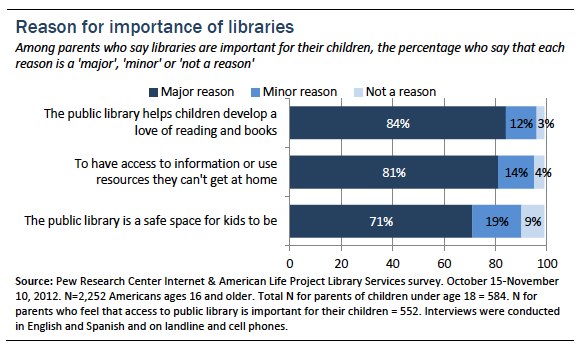
It may seem surprising that children today,  born into a digital world, still love real books. But they do, and just like generations of parents before them, parents still want libraries to help their children develop a love of reading.  According to a Pew Research study in 2013, 94% of parents of children younger than 18 feel that libraries are very important for their children,with 84% of those parents saying that feel“a major reason they want their children to have access to the library is that libraries help inculcate their children’s love of reading and books.”  Pew Study Link
 

27-reasons-for-importance
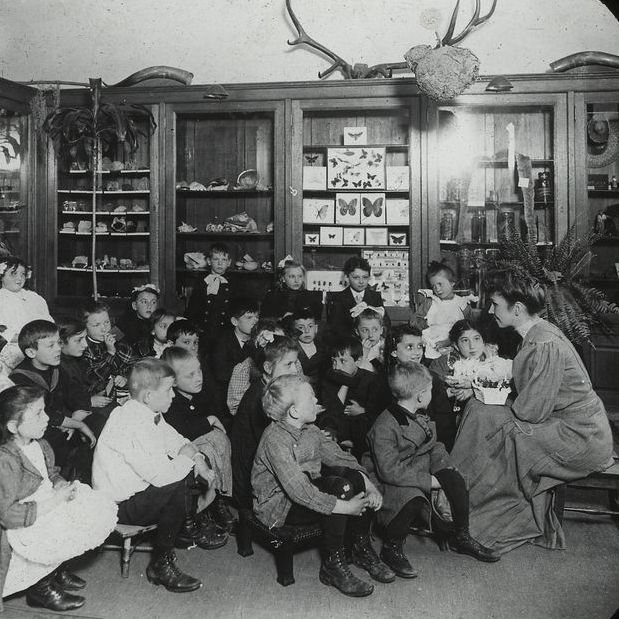
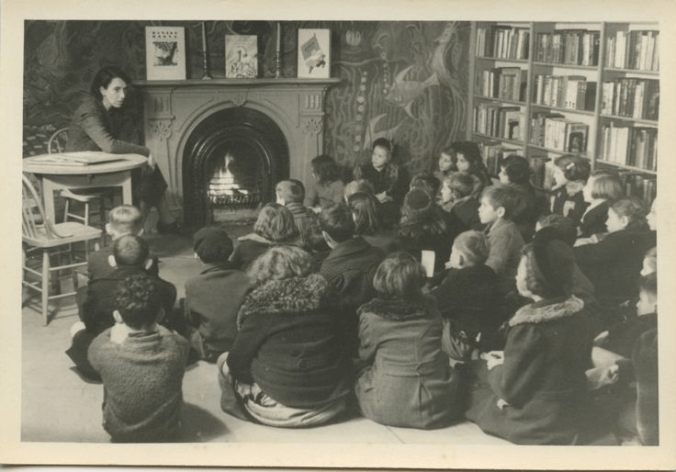
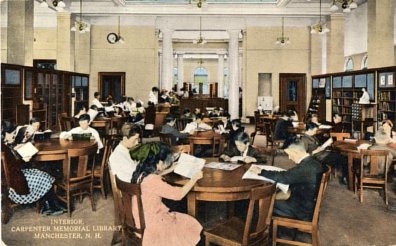
While free public libraries have been a part of American communities since the early 1800’s, a separate space for kids to be able to read and play was a much later addition. In many places, children under the age of 14 were not even permitted into libraries, and there were numerous rules and restrictions on who could touch which books.

It was only in the early 1900’s that spaces that carved out to specialize in books for infants to teenagers were created. According to children’s literature historian Leonard Marcus, at the time there was “the conviction that in a world of rapidly changing moral and social codes, innocent childhood was in urgent need of protection.”. And children’s rooms were born.
storytimehistoricalchildreninlibrary


To illustrate the rise of children’s libraries- in 1920, there were only 472 children’s librarians in the whole of the United States, while in the last report of the ALA (American Library Association) in 2012-13, there were over 90,000 librarians- just in American schools.

And the spaces for children to read have changed quite a bit as well.


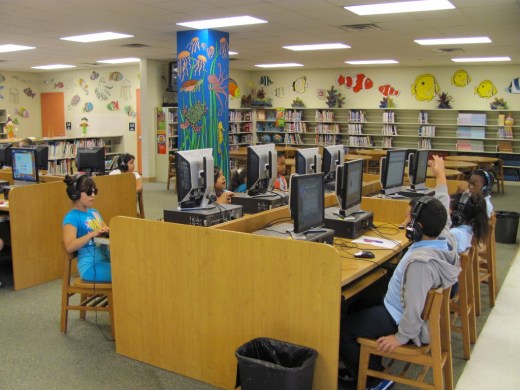
Community libraries are where children are introduced to the world of books, prior to beginning school, but then it is in the school libraries that they are taught not only how to choose books to read for pleasure, but important technological skills as consumers and researchers of all kinds of media. In fact, most school libraries are are called the “media center” of the school, and today there are far less books on shelves than there used to be because the space must also have e-books, computers and printers, and librarians are media specialists, curating computer programs, and multimedia adventures, on tablets, apps, screens and earphones.
Media-Center-2-1024x768.jpg


However, the job of a librarian is still to get kids to read.

Katherine Farrington has been a librarian at a K-3 public school in the Philadelphia suburbs for over twenty years. She has busy days, choosing books for storytimes, selecting books for class projects, and teaching children how to select books for themselves- and at ages five to nine, these are kids who come into school prior to reading and will transform into readers, of all levels. She also tries to find books for each one of the kids,

“I have the really high readers who are always on a quest to find the next great book to read and there are others who don’t have a passion for reading and I try to find books that will ignite that for them. Then there are the kids who are stuck in a rut and check out the same type of book each week and I try and steer them toward something totally different to see it it will catch their interest”

During her day she may be pulling books for a teacher who is doing a unit on Ancient Egypt, finding a book for a child whose pet just died (Farrington recommends The Tenth Good Thing About Barney, by Judith Viorst,illustrated by Eric Blegvad) or a picture book that deals with anxiety (Sophie’s Fish, by A.E. Cannon and illustrated by Lee White), and then reading out loud to a class of wiggly first graders.

Her own love of books came from her parents, who were readers and who gave her “free rein” when it came to  books. Farrington remembers that her mother read her the Ramona series by Beverly Cleary, and she read Uncle Remus stories with her father. Her own favorite book is Where The Red Fern Grows, by Wilson Rawls, which she discovered at age nine, and has passed on to many, as well as her own children.
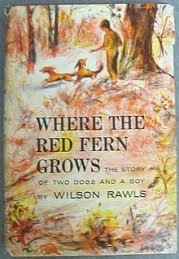
220px-Where_the_red_fern_grows_1996


For Farrington, each child is an individual. And the reason she loves being a school librarian is that “I view each student as my own special project..whatever kind of reader they are, each one is like a little puzzle that I need to try and figure out and hopefully instill a love of reading.”


Though she would probably argue it, in my opinion, librarians like Katherine Farrington, are wielders of great power. For the past century, librarians have chosen what books would be available for an entire community of children. They could accept or reject what publishers produced. Libraries are the main purchasers of expensive hardcover children’s book, and influence what books are to be included in school curriculum as well as what authors will be read. With a single review in the Library School Journal (a periodical for school and children’s librarians), thousands of nationwide sales of a new book can result.

And when the media get news of a children’s book that has been “banned” from a school or community library, it is a rally cry for all people who support the First Amendment. There may be some who use their power to deny books to children, but most librarians will go to great lengths to allow children to read about worlds that may be very unlike their own, that may have been painfully violent or harsh, and are champions of the freedom to read.

Note: banning a book also means a HUGE upsurge in sales of that book, according to a friend of mine who is a children’s author.
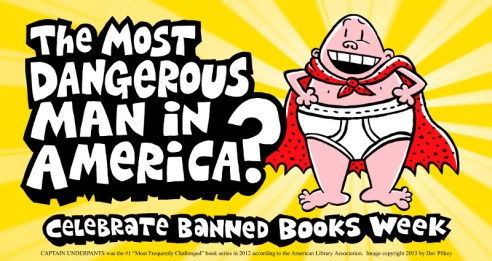
Banned-books-CPT-Underpants

By the way, here is a link to the annual list of Most Banned Books, kept by the American Library Association- and commemorated yearly in libraries across the country during Banned Books Week.Banned books week

Librarians and libraries have power. And our trust. According to what the Pew researchers found in their 2013 study, the majority of parents believe that libraries “help children develop a love of reading and books”, and 87% of those who bring their children to the library bring them with the intent of borrowing books and not engaging technology, which is the same whether the child is younger or older.
thankyou

So,let us all heap praise on children’s librarians! Caretakers of sacred spaces, they shepherd and support  the emerging reader, as one might gently swaddle a chrysalis as its resident breaks free into the world.
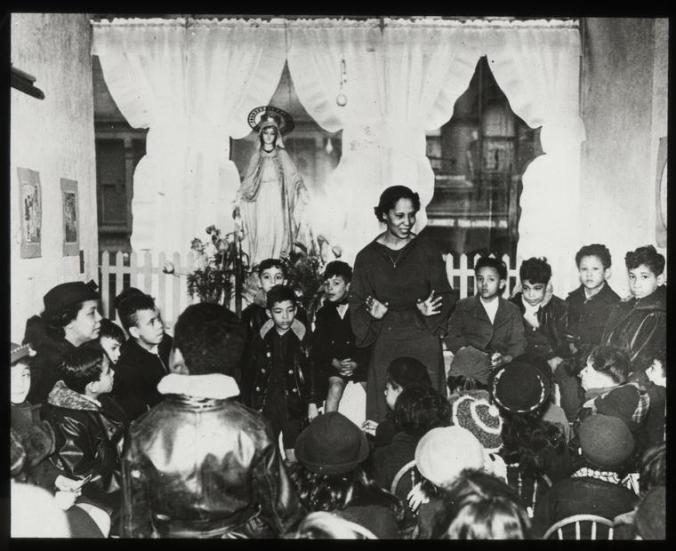
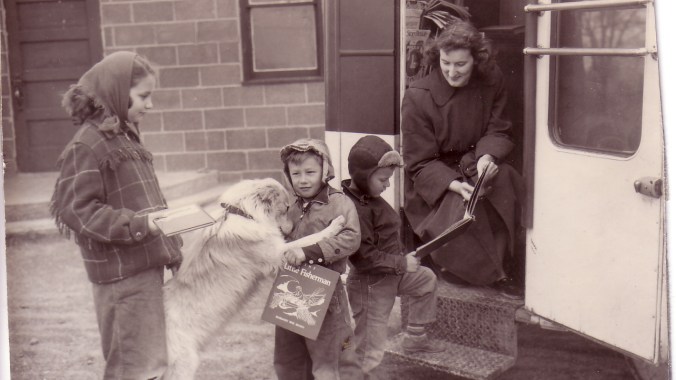
augustabakerlibrarianbkmblibrarian


Librarians engage the toddler at story time, teach the new reader how to engage the labyrinth of shelves filled with endless choices, and purchase and recommend books hoping it will be loved by many. It is the children’s librarian who issues the first library card, and inculcates the grave responsibilities that come with the incredible privilege to take books out of the library, and all the way home.

And then, after years of  encouraging and molding the reader, the children’s librarian will watch the now Big Kid leave- ready now for the grownup books, until, one day, they return with a tiny new reader of their own.
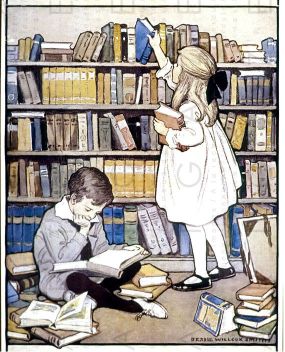
jessewilcoxsmith

The entranceway to the children’s reading room at the library in Hopkinton, Massachusetts reads:

“Books are keys to wisdom’s treasures;

Books are gates to the lands of pleasure;

Books are paths that upward lead; 

Books are friends. Come, let us read.”

Here is a wonderful video of a great school library and how it transformed itself into a great space in the school: https://www.cultofpedagogy.com/school-library/  with a podcast attached.
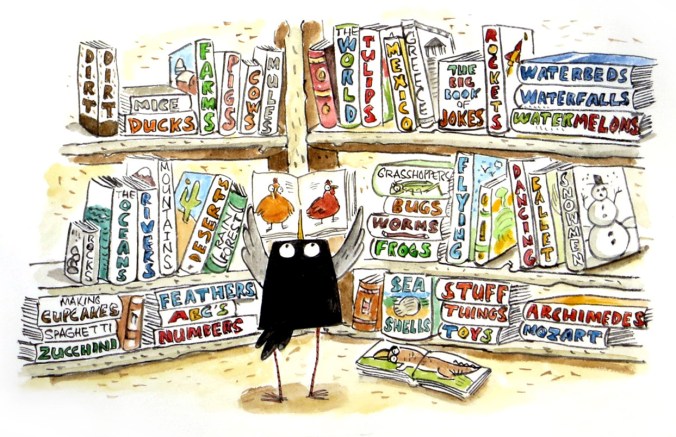
Calvin-In-the-Library-Illustration-by-Keith-Bendis

illustration by Keith Bendis


The Giving Tree: The Great Debate.

giving tree2

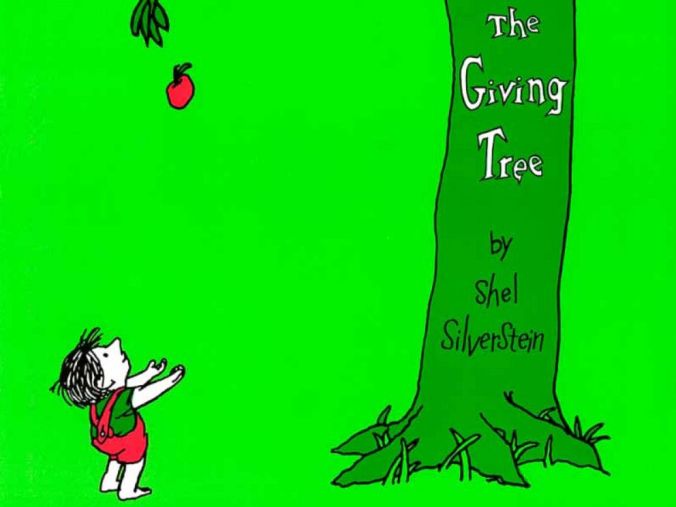
Adults either love Shel Silverstein’s The Giving Tree, or they hate it.  Very few don’t have an opinion.

I recently took a very small Facebook poll, to bring out the Lovers and the Haters (poll results: 53% in the I Love It column, 47% in the Hate It)

Here are some of the comments:

“Hate it! The boy’s a selfish jerk, and there’s no reciprocity.”

“I loved it! The tree had such unconditional love for the boy.”

“Worst book of all times teaches children be selfish self-centered and to take as much as they can.”

“Love this book”

“I hate it. it’s awful & misogynistic. not to mention it’s lack of regard for natural resources—how is it okay that the boy takes everything and gives nothing back???? it’s a total one-way relationship and speaks volumes about our unsustainable, capitalist, sexist society. i refuse to read it to my 5 year old. but that’s just me”

I’m a hater. Oh, I might cry if I was read it again, and I admit that it is a powerful story, and Silverstein’s simple illustrations are effective, but regardless, I still hate it.

The story (if you have managed to escape it since it was published in 1964), is that of a little boy who claims to love a tree, and a tree who gives all of itself in trying to make the boy happy. When the boy needs apples, the trees gives him all every single one. When the boy wants wood to build a house, it gives up every branch. And when the boy, now an old man, wants a boat, the tree gives up its truck and all that is left is a stump. Now the boy is a very old man and he comes and sits on the stump, and the tree proclaims itself happy.

Some find comfort and limitless love in this story. Others find the boy obnoxious and the tree pathetic. Whether you are of the former or latter opinion, it can easily make you cry.

ShelSilverstein_NewBioImage

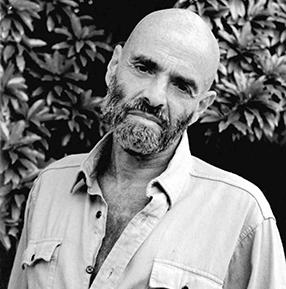
Shel Silverstein 1930-1999

The author, Shel Silverstein admits he was goaded into writing a children’s book by his friends, and even when he did, his works are not quiet sleepy stories of rambling bunnies. His works, include the bestselling books of poetry Where the Sidewalk Ends and  A Light in the Attic, feature Silverstein’s recognizable line drawn illustrations filled with tousled-haired humans with knobby knees. His poetry has horrible children and grotesque adults, silly premises and even violent activity, all of which are beloved of most 10-year olds, (and even those far above 10) and are made of simple rhymes, in combination with slyly subversive conclusions. The Giving Tree, however, does not contain any humor, only pathos, which is why its huge popularity stymies some of us who are not fans.

Just to give an accurate idea of just HOW many copies of this book are out there in the world: In 2001 Publishers Weekly (PW) notes it as No.14 in the top-selling children’s books of all time, having sold 5,603,187 at the time of the post in Dec. 2001. In 2017, the books sold 210,370 copies. Hazarding rough numbers, if the book sells 200,00 per year, then since 2001- the sales number should be at around 9 million today.  That is a WHOLE lot of crying over a sad old tree.


Link to facebook poll:

https://www.facebook.com/plugins/post.php?href=https%3A%2F%2Fwww.facebook.com%2Fjuliecswinkler%2Fposts%2F10216659438504901&width=500

Here are links to some of the articles and blog posts that sum up how much passion this book has inspired:

The Haters:

http://alisoncherrybooks.com/uncategorized/why-i-hate-the-giving-tree/

https://www.newyorker.com/books/page-turner/giving-tree-50-sadder-remembered

https://litreactor.com/columns/your-favorite-book-sucks-the-giving-tree-by-shel-silverstein

http://www.leslieirishevans.com/1128/on-shel-silverstein-and-the-goddamn-giving-tree/

https://www.huffingtonpost.com/jesse-kornbluth/hey-kids-a-decade-after-h_b_977212.html

OMG I LOVE this book!!:

https://fromwordstoworlds.wordpress.com/2016/06/25/the-giving-tree-a-delicate-story-on-unconditional-love/

http://theweek.com/articles/443019/uncomfortable-truth-giving-tree

https://thefilmstage.com/news/sundance-review-spike-jonze-creates-unique-love-story-with-im-here/

Here is a link to the page of the author/illustrator: Shel Silverstein


Words on Books

I thought I would provide quotations about books, especially the ones that pertain to the love of reading children’s books. Enjoy!

child-reading

“Books were my pass to personal freedom. I learned to read at age three, and soon discovered there was a whole world to conquer that went beyond our farm in Mississippi.” Oprah Winfrey

“Every reader of A Cat in the Hat will feel that the story revolves around a piece of withheld information: what private demon or desires compelled this mother to leave two small children at home all day, with the front door unlocked, under the supervision of a fish.” Louis Menand, The New Yorker, on the occasion of the 50th anniversary of A Cat in the Hat by Dr Seuss

“There is more treasure in books then in all the pirates’ loot on Treasure Island…and best of all, you can enjoy these riches every day of your life.”Walt Disney

Words have a power beyond their meaning. I remember the stories of my childhood but I remember the single words that shone out of fairy stories milk and buns, a flask of wine, a cabbage cut fresh from the garden….I would read again stories that frightened me, for the sake of such perceptions. They seem to echo an older life, beyond my knowing.” Pamela Brown

“I read because my father read to me. And because he’d read to me, when my time came I knew intuitively there is a torch that is supposed to be passed from one generation to the next. And through countless nights of reading, I began to realize that when enough of the torchbearers parents and teachers stop passing the torches, a culture begins to die.” Jim Trelease

“There is a space on everyone’s bookshelves for books one has outgrown but cannot give away. They hold our youth between their leaves, like flowers pressed on a half-forgotten summer’s day.” Marion Garretty

“I read A Wrinkle in Time three times in a row once, when I was twelve, because I couldn’t bear for it to end.” Anna Quindlen

One of the greatest gifts adults can give- to their offspring and to their society- is to read to children.” Carl Sagan

“I was born with the impression that what happened in books was much more reasonable, and interesting, and real, in some ways, than what happened in life.” Anne Tyler

I am part of all that I have read.” John Kieran

“Anyone who read Catcher in the Rye or The Outsiders as an adolescent will remember how those books crystallize the conflicting emotions, the yearning for security and the need to rebel, so endemic to that stage of life.” Bruce Handy

“One’s collection comes to symbolize the content one’s mind. Books read in childhood, in yearning adolescence, at college, and in the first self-conscious years of adulthood travel along, often, with readers as they move from house to house.” John Updike

“My education was the liberty I had to read indiscriminately and all the time, with my eyes hanging out.” Dylan Thomas

“I know exactly how I felt when I first read The Brothers Karamazov. I can still taste the words, smell the air of a Russian winter.” Helen Thomson

“That is part of the beauty of all literature. You discover that your longings are universal longings, that you’re not lonely and isolated from anyone. You belong.”F. Scott Fitzgerald

“When I was a ten-year old bookworm and used to kiss the dust jacket pictures of authors as if they were icons, it used to amaze me that these remote people could provoke me to love.” Erica Jong


“Books are the keys to wisdom’s treasures;

Books are gates to the land of pleasure;

Books are paths that upwards lead;

Books are friends. Come, let us read”

Inscribed on Children’s Reading Room, Hopkington, MA

“It is a great thing to start life with a small number of really good books which are your very own.” Arthur Conan Doyle

When you read to a child, when you put a book in a child’s hands, you are bringing that child news of the infinitely varied nature of life. You are an awakener.” Paula Fox

“The greatest blessing of my youth was that I grew up in a world of cheap and abundant books.”C.S. Lewis

“Few children learn to read books by themselves. Someone has to lure them into the wonderful world of the written word. Someone has to show them the way.” Orville Prescott

“In books I have traveled, not only to other worlds, but into my own. I learned who I was and who I wanted to be, what I might aspire to,, and what I might dare to dream about my world and myself” Anna Quindlen

“My alma mater was books, a good libary…I could spend the rest of my life reading, just satisfying my curiosity.” Malcolm X

“These are not books, lumps of lifeless paper, but minds alive on the shelves. From each of them goes out its own voice…and just as a touch of a button on our set will fill the room with music, so by taking down one of these volumes and opening it, one can call into range the voice of a person far distant in time and space, and hear them speaking to us, mind to mind, heart to heart.” Gilbert Highet

‘No book is really worth reading at the age of ten which is not equally (and often far more) worth reading at the age of fifty and beyond.” C.S.Lewis


“Books are where things are explained to you.

Life is where things are not.” Julian Barnes


“When I was little, maybe eight or nine, the books that made an enormous impression on me, and didn’t fade, were The Scarlet Pimpernel, A Tale of Two Cities, and all of the Superman comic books. They all involve the same idea, which is someone who is ineffective and foppish on the surface but powerful and effective and mysterious and unstoppable in secret….they encouraged me to develop the notion that you might appear one way but really be another.” Amy Bloom

pile-of-old-books

“My father gave me free run of his library. When I think of my boyhood, I think of the books I read.” Jorge Luis Borges

“Children are made readers on the laps of their parents.”Emilie Buchwald

“I am sure I read every book of fairy tales in our branch library, with one complaint all that long, golden hair. Never mind- my short brown hair became long and golden as I read and when I grew up I would write a book about a brown-haired girl to even things up.” Beverly Cleary

“Children have a lot more to worry about from the parents who raised them than from the books they read.E.L.Doctorow

“Summers lasted forever when I was growing up in Texas. They were hot and they were muggy and they were very still- unless I happened to be sprawled belly-down on the linoleum with an oscillating fan tickling my toes and a Nancy Drew mystery under my nose. To my mind, that was as close to heaven as a Houston girl could get.” Dianne Donovan

“My mother and father were illiterate immigrants from Russia. When I was a child they were constantly amazed that I could go to a building and take a book on any subject. They couldn’t believe this access to knowledge we have here in America. They couldn’t beleive that it was free.” Kirk Douglas

“What one reads becomes part of what one sees and feels.” Ralph Ellison

“My interest began as an interest in reading, which then was translated into an interest in writing…I can remember a Sunday school prize or something when I was about eleven years old; I won a copy of David Copperfield. Up to that time I’d read the Bobbsey Twins and then Tom Swift and the Rover Boys and Tarzan, but since I got this as a prize, I decided I should read it. I found a world that was realer than the world I lived in, unlike those Tarzan and other books. I knew David Copperfield better than anybody I knew in the real world, including myself.” Shelby Foote

“Your family sees you as a lazy lump lying on the couch, propping a book up upon your stomach, never realizing that you are in the middle of an African safari that has just been charged by elephants, or in the drawing-room of a large English country house interrogating the butler about the body discovered on the Aubusson carpet.” Cynthia Heimel


o-KIDS-READING-facebook

“A common complain is that children’s books, specially high-quality picture books, cost so much. All I can say is that they cost less than a dinner out or a new pair of jeans. The books I read as a child transformed me, gave meaning and perspective to my experiences, and helped to mould whatever imaginative, intellectual or creative strengths I can lay claim to now. No doll or game had that impact on me, no pair of jeans ever changed my life.” Michelle Landsberg

Resources used: Books and Reading: A book of quotations, edited by Bill Bradfield, Book Lovers Quotations, edited by Helen Exley