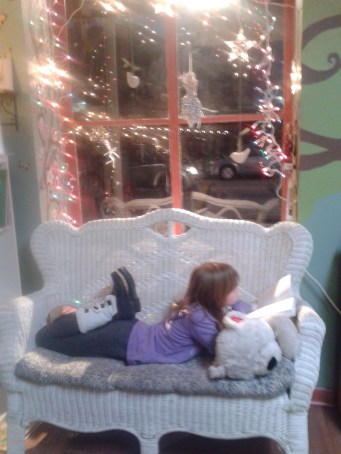
Reading books should be joyful.
A friend told me once that she has spent her professional life working with children’s literature because when she was a little girl she was very self conscious of a slight physical disfigurement that she didn’t know if anyone else except her shared. Then one day, her fourth grade teacher handed her a book she had never read, an old-fashioned story about a boy during the American Revolution. As she read, she realized that the main character had the exact same disfigurement that she did. And she no longer felt alone.
Now my friend spends her days making sure that books get to the kids who need them. She is a children’s librarian.
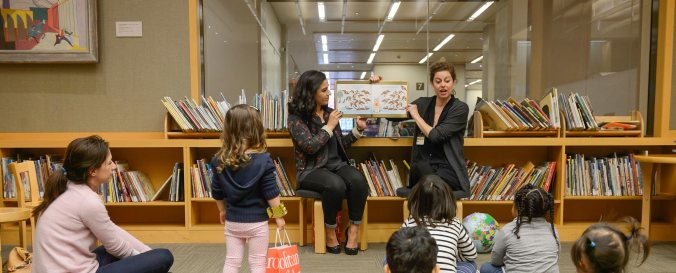
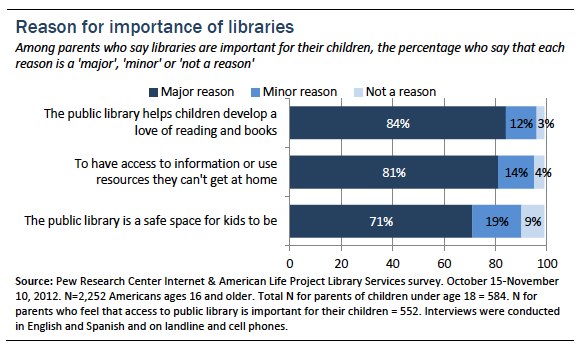
It may seem surprising that children today, born into a digital world, still love real books. But they do, and just like generations of parents before them, parents still want libraries to help their children develop a love of reading. According to a Pew Research study in 2013, 94% of parents of children younger than 18 feel that libraries are very important for their children,with 84% of those parents saying that feel“a major reason they want their children to have access to the library is that libraries help inculcate their children’s love of reading and books.” Pew Study Link
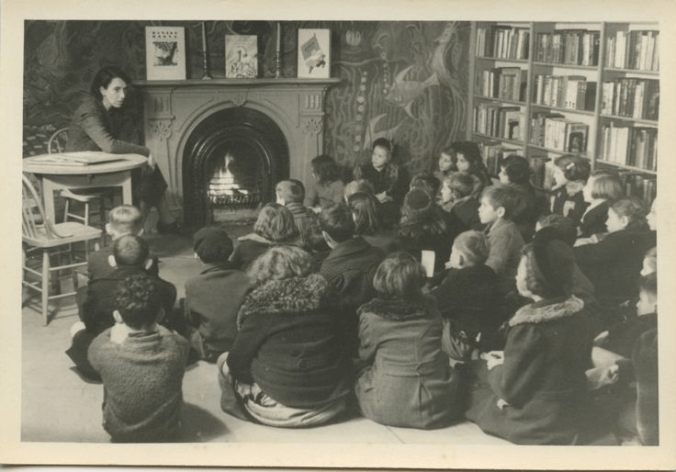
While free public libraries have been a part of American communities since the early 1800’s, a separate space for kids to be able to read and play was a much later addition. In many places, children under the age of 14 were not even permitted into libraries, and there were numerous rules and restrictions on who could touch which books.


It was only in the early 1900’s that spaces that carved out to specialize in books for infants to teenagers were created. According to children’s literature historian Leonard Marcus, at the time there was “the conviction that in a world of rapidly changing moral and social codes, innocent childhood was in urgent need of protection.”. And children’s rooms were born.
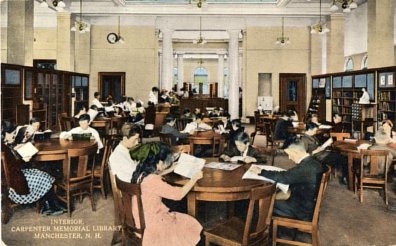
To illustrate the rise of children’s libraries- in 1920, there were only 472 children’s librarians in the whole of the United States, while in the last report of the ALA (American Library Association) in 2012-13, there were over 90,000 librarians- just in American schools.
And the spaces for children to read have changed quite a bit as well.


Community libraries are where children are introduced to the world of books, prior to beginning school, but then it is in the school libraries that they are taught not only how to choose books to read for pleasure, but important technological skills as consumers and researchers of all kinds of media. In fact, most school libraries are are called the “media center” of the school, and today there are far less books on shelves than there used to be because the space must also have e-books, computers and printers, and librarians are media specialists, curating computer programs, and multimedia adventures, on tablets, apps, screens and earphones.
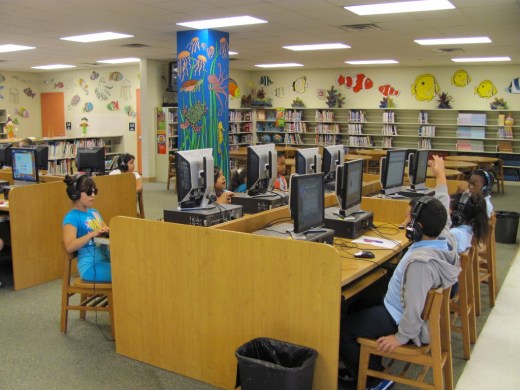
However, the job of a librarian is still to get kids to read.
Katherine Farrington has been a librarian at a K-3 public school in the Philadelphia suburbs for over twenty years. She has busy days, choosing books for storytimes, selecting books for class projects, and teaching children how to select books for themselves- and at ages five to nine, these are kids who come into school prior to reading and will transform into readers, of all levels. She also tries to find books for each one of the kids,
“I have the really high readers who are always on a quest to find the next great book to read and there are others who don’t have a passion for reading and I try to find books that will ignite that for them. Then there are the kids who are stuck in a rut and check out the same type of book each week and I try and steer them toward something totally different to see it it will catch their interest”
During her day she may be pulling books for a teacher who is doing a unit on Ancient Egypt, finding a book for a child whose pet just died (Farrington recommends The Tenth Good Thing About Barney, by Judith Viorst,illustrated by Eric Blegvad) or a picture book that deals with anxiety (Sophie’s Fish, by A.E. Cannon and illustrated by Lee White), and then reading out loud to a class of wiggly first graders.


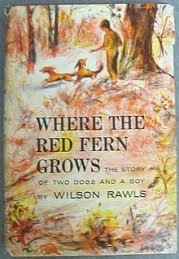
Her own love of books came from her parents, who were readers and who gave her “free rein” when it came to books. Farrington remembers that her mother read her the Ramona series by Beverly Cleary, and she read Uncle Remus stories with her father. Her own favorite book is Where The Red Fern Grows, by Wilson Rawls, which she discovered at age nine, and has passed on to many, as well as her own children.
For Farrington, each child is an individual. And the reason she loves being a school librarian is that “I view each student as my own special project..whatever kind of reader they are, each one is like a little puzzle that I need to try and figure out and hopefully instill a love of reading.”


Though she would probably argue it, in my opinion, librarians like Katherine Farrington, are wielders of great power. For the past century, librarians have chosen what books would be available for an entire community of children. They could accept or reject what publishers produced. Libraries are the main purchasers of expensive hardcover children’s book, and influence what books are to be included in school curriculum as well as what authors will be read. With a single review in the Library School Journal (a periodical for school and children’s librarians), thousands of nationwide sales of a new book can result.
And when the media get news of a children’s book that has been “banned” from a school or community library, it is a rally cry for all people who support the First Amendment. There may be some who use their power to deny books to children, but most librarians will go to great lengths to allow children to read about worlds that may be very unlike their own, that may have been painfully violent or harsh, and are champions of the freedom to read.
Note: banning a book also means a HUGE upsurge in sales of that book, according to a friend of mine who is a children’s author.
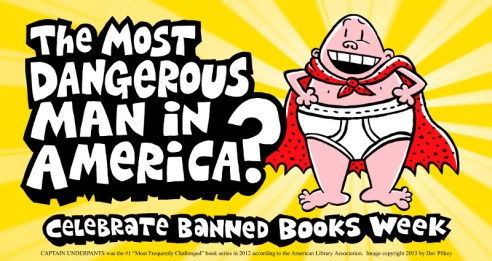
By the way, here is a link to the annual list of Most Banned Books, kept by the American Library Association- and commemorated yearly in libraries across the country during Banned Books Week.Banned books week
Librarians and libraries have power. And our trust. According to what the Pew researchers found in their 2013 study, the majority of parents believe that libraries “help children develop a love of reading and books”, and 87% of those who bring their children to the library bring them with the intent of borrowing books and not engaging technology, which is the same whether the child is younger or older.
So,let us all heap praise on children’s librarians! Caretakers of sacred spaces, they shepherd and support the emerging reader, as one might gently swaddle a chrysalis as its resident breaks free into the world.
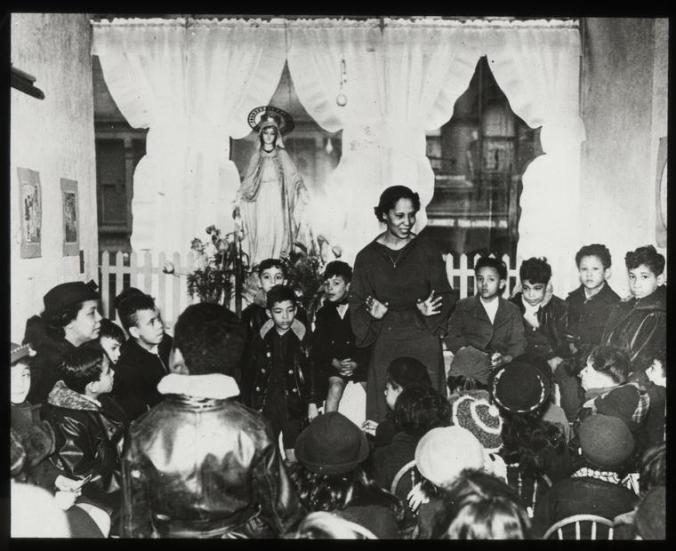
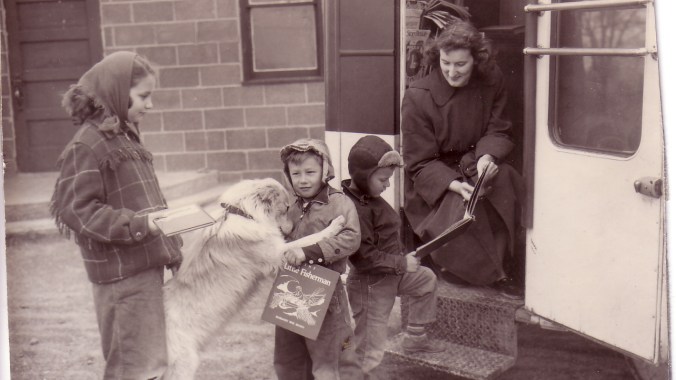
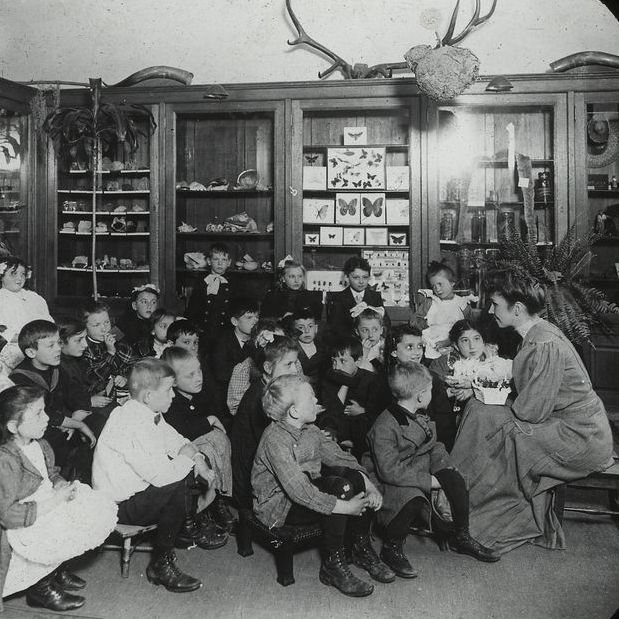
Librarians engage the toddler at story time, teach the new reader how to engage the labyrinth of shelves filled with endless choices, and purchase and recommend books hoping it will be loved by many. It is the children’s librarian who issues the first library card, and inculcates the grave responsibilities that come with the incredible privilege to take books out of the library, and all the way home.
And then, after years of encouraging and molding the reader, the children’s librarian will watch the now Big Kid leave- ready now for the grownup books, until, one day, they return with a tiny new reader of their own.
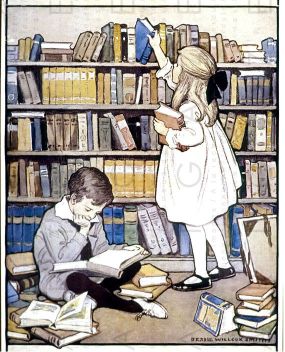
The entranceway to the children’s reading room at the library in Hopkinton, Massachusetts reads:
“Books are keys to wisdom’s treasures;
Books are gates to the lands of pleasure;
Books are paths that upward lead;
Books are friends. Come, let us read.”
Here is a wonderful video of a great school library and how it transformed itself into a great space in the school: https://www.cultofpedagogy.com/school-library/ with a podcast attached.
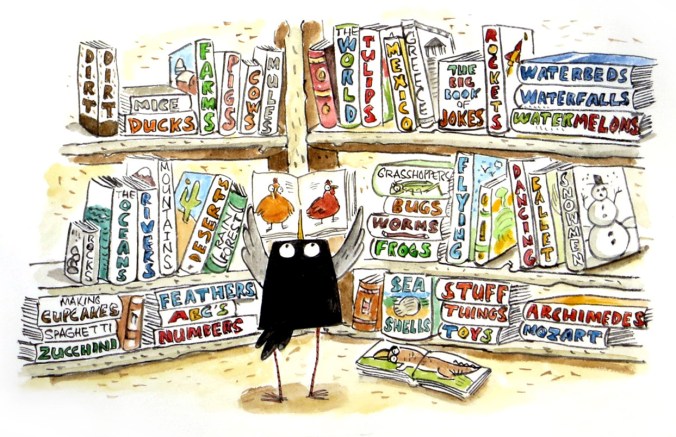
illustration by Keith Bendis
 Retoldtales