The Giving Tree: The Great Debate.

giving tree2

Adults either love Shel Silverstein’s The Giving Tree, or they hate it.  Very few don’t have an opinion.

I recently took a very small Facebook poll, to bring out the Lovers and the Haters (poll results: 53% in the I Love It column, 47% in the Hate It)

Here are some of the comments:

“Hate it! The boy’s a selfish jerk, and there’s no reciprocity.”

“I loved it! The tree had such unconditional love for the boy.”

“Worst book of all times teaches children be selfish self-centered and to take as much as they can.”

“Love this book”

“I hate it. it’s awful & misogynistic. not to mention it’s lack of regard for natural resources—how is it okay that the boy takes everything and gives nothing back???? it’s a total one-way relationship and speaks volumes about our unsustainable, capitalist, sexist society. i refuse to read it to my 5 year old. but that’s just me”

I’m a hater. Oh, I might cry if I was read it again, and I admit that it is a powerful story, and Silverstein’s simple illustrations are effective, but regardless, I still hate it.

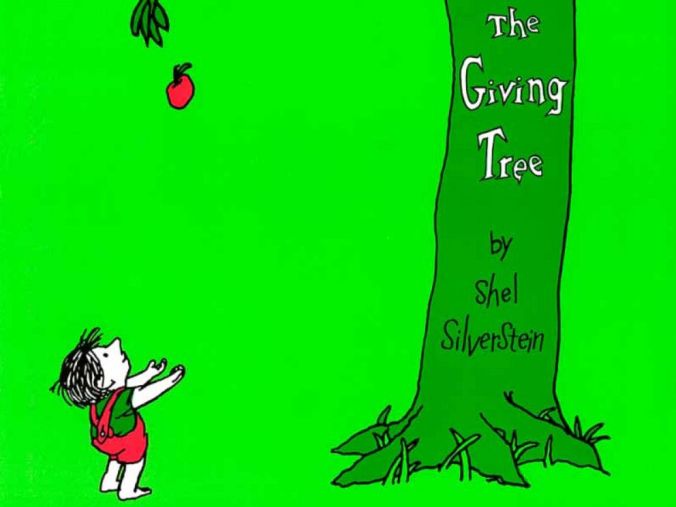
The story (if you have managed to escape it since it was published in 1964), is that of a little boy who claims to love a tree, and a tree who gives all of itself in trying to make the boy happy. When the boy needs apples, the trees gives him all every single one. When the boy wants wood to build a house, it gives up every branch. And when the boy, now an old man, wants a boat, the tree gives up its truck and all that is left is a stump. Now the boy is a very old man and he comes and sits on the stump, and the tree proclaims itself happy.

Some find comfort and limitless love in this story. Others find the boy obnoxious and the tree pathetic. Whether you are of the former or latter opinion, it can easily make you cry.
ShelSilverstein_NewBioImage

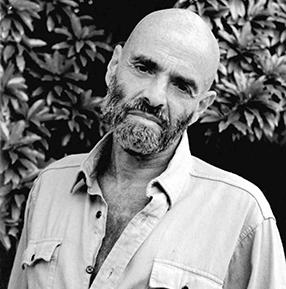
Shel Silverstein 1930-1999

The author, Shel Silverstein admits he was goaded into writing a children’s book by his friends, and even when he did, his works are not quiet sleepy stories of rambling bunnies. His works, include the bestselling books of poetry Where the Sidewalk Ends and  A Light in the Attic, feature Silverstein’s recognizable line drawn illustrations filled with tousled-haired humans with knobby knees. His poetry has horrible children and grotesque adults, silly premises and even violent activity, all of which are beloved of most 10-year olds, (and even those far above 10) and are made of simple rhymes, in combination with slyly subversive conclusions. The Giving Tree, however, does not contain any humor, only pathos, which is why its huge popularity stymies some of us who are not fans.

Just to give an accurate idea of just HOW many copies of this book are out there in the world: In 2001 Publishers Weekly (PW) notes it as No.14 in the top-selling children’s books of all time, having sold 5,603,187 at the time of the post in Dec. 2001. In 2017, the books sold 210,370 copies. Hazarding rough numbers, if the book sells 200,00 per year, then since 2001- the sales number should be at around 9 million today.  That is a WHOLE lot of crying over a sad old tree.


Link to facebook poll:

https://www.facebook.com/plugins/post.php?href=https%3A%2F%2Fwww.facebook.com%2Fjuliecswinkler%2Fposts%2F10216659438504901&width=500

Here are links to some of the articles and blog posts that sum up how much passion this book has inspired:

The Haters:

http://alisoncherrybooks.com/uncategorized/why-i-hate-the-giving-tree/

https://www.newyorker.com/books/page-turner/giving-tree-50-sadder-remembered

https://litreactor.com/columns/your-favorite-book-sucks-the-giving-tree-by-shel-silverstein

http://www.leslieirishevans.com/1128/on-shel-silverstein-and-the-goddamn-giving-tree/

https://www.huffingtonpost.com/jesse-kornbluth/hey-kids-a-decade-after-h_b_977212.html

OMG I LOVE this book!!:

https://fromwordstoworlds.wordpress.com/2016/06/25/the-giving-tree-a-delicate-story-on-unconditional-love/

http://theweek.com/articles/443019/uncomfortable-truth-giving-tree

https://thefilmstage.com/news/sundance-review-spike-jonze-creates-unique-love-story-with-im-here/

Here is a link to the page of the author/illustrator: Shel Silverstein
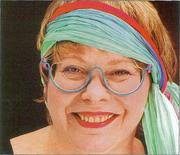
 

My Paula Danziger Moment


I have had some pretty geeky fangirl moments at writer’s conferences. I have geeked out meeting Tamora Pierce, John Green, Henry Winkler (yes, The Fonz, and also children’s books author), Sherman Alexie, Carrie Jones, and others. I have books proudly enshrined on my shelves with the signatures and best wishes to me from amazing authors. I even made it into a page of mentions in a wonderful middle-grade novel.

But it was when I had the brief opportunity to meet, and hug, Paula Danziger, that shines the brightest of them all.

paula

Paula Danziger 1944-2004

I have written in a previous post about how important the books of Judy Blume were in walking me down the path of girlhood. If Judy Blume held onto one of my hands, Paula Danziger held firmly onto the other. She tugged me along with promises that a geeky, sensitive, never-to-be-pretty-in-the-tampon-ad-kind-of-way girl would eventually triumph- as long as I never gave up on what made me special.

In books like The Cat Ate My Gymsuit (which invited a conversation with my mom about what were gymsuits exactly?) and The Divorce Express, Paula’s characters were not every-girl; they were the slightly irregulars, the intelligent and the misfit- they were more me than any other characters I had met.

Parents who yelled at each other and yelled at their kids. Characters who talked to themselves and sounded out how they were sure to goof up. The consequences of divorced parents who were “finding their happy” but resulted in kids dragged from house to house or even to space stations. Unlikely friendships that blossomed between total opposites, and even between (gack!) girls and boys!

Paula Danziger’s stories would not be considered Young Adult in today’s market, but in the 1980’s they felt just right to me as a young teenager, consumed with issues of self-esteem and friendships, but not yet pushed into the edgier world of “books with S-E-X” in them. Parents were not just authorities, but beginning to seem as if they were characters in their own right, not just obeyed or ignored, but sometimes pitied. It was enough to consider having an actual conversation with my mom over dinner. Maybe.

Years passed. I carried some of her books with me to places of my adulthood, and even parenthood. And when my own daughters were getting to be real little people and I was alone for sometimes as much as 2-3 hours a day, I began thinking of what I should “do” someday, and how exactly one went about being a grown-up.

So, I thought about trying to become a writer – not too sure that I had anything to say. Despite my love of reading and maybe of playing with words (and, honestly, I thought everyone heard sentences in their heads that they would try and rework until they sounded just right) I was pretty sure one would FEEL like a writer if you really were one. But I was curious about the world of children’s books, and I was lucky to discover SCBWI, The Society of Children’s Book Writers and Illustrators- a group devoted to finding, polishing, celebrating, and honoring those who have created the world of kid lit.

(By the way- I highly suggest SCBWI as a place for anyone who wants to know more about writing or illustrator for children- and here is the handy-dandy link: SCBWI )

It was here, at my very first national event, that I got the opportunity to meet HER. That’s Paula Danziger!!! Squeeee! PAULA DANZINGER!!!!!*gasp*  She shone with verve and personality, in layers of colors and jewelry, the epitome of her own advice- writers are artists- dress like it!

I got the chance that evening to thank her. And hug her.

Paula Danziger died in 2004, far too young, and with so much more artistry in her. I felt grief but solace that I had the opportunity to say thank you to someone who was a hero to me. I am grateful that I had the chance, though, of course, there was not enough time for me to express it all.


Those who are a bit younger than me may recognize Paula Danziger as the author of the popular early chapter book series featuring a girl named Amber Brown:


Here is a lovely tribute to Paula Danziger from some of her friends in the children’s book world:Tribute to Paula Danziger

And by the way, the SCBWI loves Paula Danziger so much that they created a grant in her honor.  A school can win a visit from a children’s book author or illustrator. You can read more about it here:


And another article about the influence and life of Paula Danziger: https://www.publishersweekly.com/pw/by-topic/childrens/childrens-authors/article/32633-paula-danziger-remembered.html

Boy Crazy- Learning Though Judy Blume

For many girls of my Gen-X generation, as we walked into the scary world of growing up we clutched a map that had a single cartographer: Judy Blume. She wrote the books that spanned from Freckle Juice to Forever– early chapter books to mature young adult, and she wrote about the secrets and desires we told only to our diaries.

With her guidance I would walk the path from the earliest chapter books through puberty (Are You There God, It’s Me, Margaret) school conflicts, (Blubber), family conflicts (It’s Not the End of the World), racism (Iggie’s House), self-esteem and perception (Deenie), death (Tiger Eyes), even religious realities and the holocaust (Starring Sally J Freedman, as Herself).

judyblume


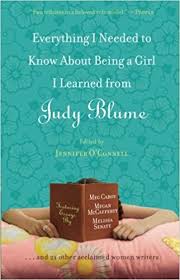
I was so happy to find this book: Everything I needed to Know About Being a Girl I Learned from Judy Blume. Filled with stories by authors around my own age, every woman wrote of her own experience with Judy Blume, and just as I did when I first read Blume books, I was shocked to find myself again. In each anecdote, I found familiarity- I was that same girl that the author confessed herself to be, and the memories of how I felt as I read the books mentioned came rushing back to me. I began thinking again of one book that I returned to again and again, seeking answers that, from  no fault of Blume, would remain elusive.

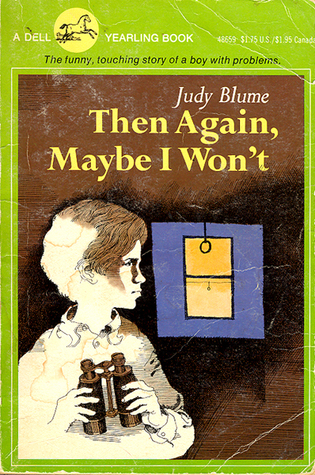
The book that most fascinated me was not about my fellow girls, but about boys- a subject I had zero experience with and had hoped Judy Blume would guide me. In Then Again Maybe I Won’t the protagonist was a boy who found himself in a new neighborhood, a wealthy suburb different than his Jersey City roots. The main issue of the book was his spying on a neighbor girl while she undressed, and what Blume described as “nocturnal emissions”, and involved him messing up his sheets. I didn’t get it. I understood that there was something happening in his dreams and that the character seemed befuddled by why his sheets were wet- but I stayed confused. When I read this book when I was around 11, I remember going back and rereading lines, thinking that I’d missed the vital clue that would help me unlock the “something” that I knew I missed. Switch of metaphor- I couldn’t find Waldo no matter how hard I looked.


thenagainmaybe

Looking back, I was barely stepping into my own puberty, and had lots to learn about myself. Whatever was going on with boys would just remain theoretical. I didn’t have brothers, my parents were divorced, the male body and whatever it did would be decades away for me to study and question. But I am glad I had the book to read- Blume helped me see that boys did not get off easy. We girls had periods and hair and breasts to deal with, and she said boys also had messy and confusing things happening to them. If the particulars stayed mysterious, it was enough to know that it wasn’t just us girls.

I am so grateful for Judy Blume. She gave me connections that I desperately needed when I felt alone, and provided a map I would follow into womanhood. Books that we read when we are children are not only those that hold us in the warmth and love of bedtime- the books we read invite us into wider worlds, even guide us down paths we feel compelled to walk.

Link to the amazon page for the book: Everything I Learned About Being a Girl, I Learned From Judy Blume: