Continuing with a basic history of books for kids… (see part I here)
By the early mid 1800’s, with the Industrial Revolution leading to improvements in printing and paper-making, and a conscious community effort to improve literacy, there was an expanded book market, including books published just for children.
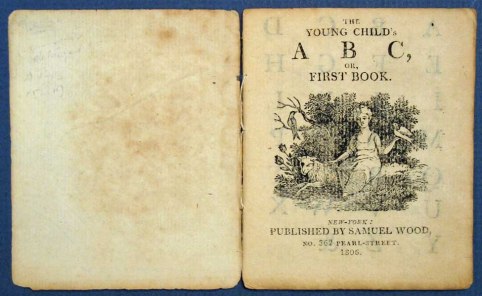
In New York City, the American city that had become the center of American publishing, there were several bookstores that specialized in selling and publishing children’s books Samuel Wood, Mahlon Day whose Juvenile Books Store was on Water Street, Harper Brothers, and Solomon King. According to Leonard Marcus, historian and expert on children’s literature, books published for kids at this time broke down into the following areas (with rough calculations for percentages):
- 25% classed as moral tales and fables
- 15% were school books, readers and primers
- 50% dealt with knowledge in general (history, biographies, and amusements)
- 10% religious in nature
One of the first best-sellers for children was Mother Goose’s Melodies, published by Munroe and Francis, Boston. The first edition, 1825, was not very popular, but the re-published edition in 1833 achieved national distribution and sales.
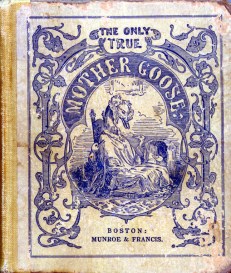
Mother Goose Munroe & Francis 1833
One change that occurred in the children’s books in the mid-1800’s. With Romanticism influencing literature and the arts, children’s books included more tales of whimsy, fantasy, imagination and pretend. There was still an emphasis on knowledge, and students were expected to learn and memorize facts and figures but they also learned poetry by heart, and were introduced to tales written by adult authors written especially for them, including Nathaniel Hawthorne (A Wonder Book for Girls and Boys, 1852)
The Golden Age of Children’s book illustrations came with the British illustrators Walter Crane, Randolph Caldecott, and Kate Greenaway- and the publisher Edmund Evans. The images that invented a fantasy land populated by frolicking maidens and youth, and fairies and heroes, in rich colors and bucolic landscapes, were an intrinsic part of the Victorian and Edwardian periods (late 1800’s- early 1900’s)
Randolph Caldecott (for more information here)
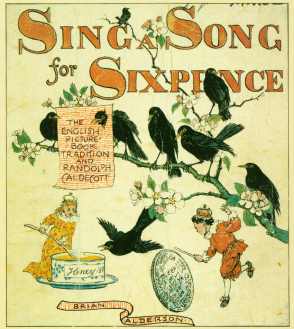
Walter Crane (more information here)
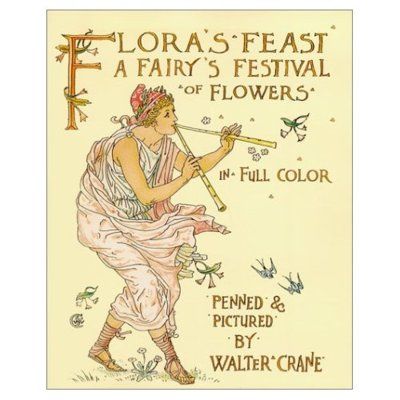
Kate Greenaway (more information on Greenaway here)
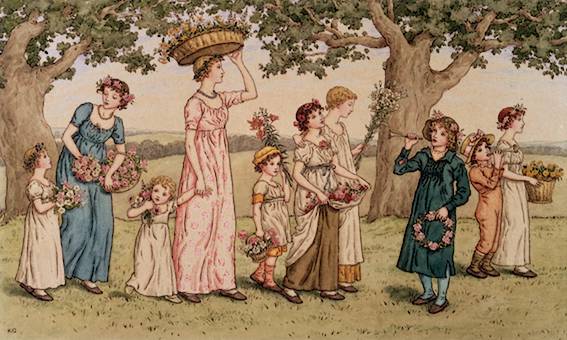
Printer Edmund Evans commissioned, designed and produced work by many of the greatest children’s book illustrators. Learn more about Evans here
America would have its own Golden Age of children’s literature in the mid-1900’s- and the 20th century would add characters and stories that are, in my opinion, a part of our shared cultural heritage no less than Superman or George Washington.
If the 19th century was the Industrial Revolution, then we can call the 20th century the Scientific Revolution. In addition to medicine, physics, and chemistry the job that parents had been doing for thousands of years suddenly came under greater scientific scrutiny, and this had influence on the books that children were given to read, or had read to them.
Here are some of the ideas that shaped children’s literature of the 20th century:
Behaviorism and John Broadus Watson-
- behaviorist held that parents (and society) has the responsibility to shape and mold children into being efficient tools, with good work ethics. Parents were told to institute strict control from the time of infancy, and that showing softness of affection would “spoil” the child who would become the man. According to psychologist Watson, parents should “treat them as though they were young adults. Dress them, bathe them with care and circumspection. Let your behavior always be objective and kindly firm. Never hug and kiss them, never let them sit on your lap…shake hand with them in the morning” from Watson’s “Psychological Care of Infant and Child”
(this reminds me of the “before” picture of the Banks family in Walt Disney’s Mary Poppins)
Lucy Sprague Mitchell, founder of the Bank Street School
- Founded in 1916 and called the “Bureau of Educational Experiences” was a laboratory nursery school, staffed by teachers, psychologists and researchers, focused on finding on how children can learn to their best potential. Mitchell was a firm-proponent of the “Here and Now” philosophy for children’s literature. She believed that children should read stories that were drawn from everyday settings, and written and illustrated focusing on observations of how children see the world around them. One of the most famous of the authors who followed Mitchell’s philospohy in her writings was Margaret Wise Brown, author of Goodnight Moon. There was no place for fairy tales or nursery rhymes, and no place for magical creatures or imaginary worlds.
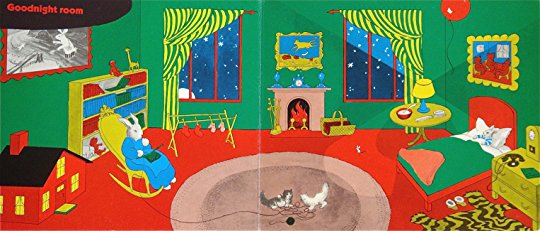
According to Lucy Sprague Mitchell, “it is only the jaded adult mind, afraid to trust the child’s own fresh springs of imagination, that feels for children the need of the stimulus of magic” (from the introduction to The Here and Now Story Book)
Freudian child-centred parenting:
- As promoted by experts such as Dr Benjamin Spock, in his 1946 book Baby and Child Care, the emphasis was now focused on the child and their stages of growth and learning. These experts emphasized the importance of hand-on parenting, and of showing affection for children. Spock also encouraged mothers to trust their own instincts when it came to taking care of infants, and the importance of the mother-child bond. The emphasis was on seeing the world from teh persepctive of the child, and understanding what are the normal actions of a particular age and stage of development.
Bettleheim and The Uses of Enchantment (1976)
- Bruno Bettleheim’s book, The Uses of Enchantment- the Meaning and Importance of Fairy Tales was crucial to explain the idea that fairy tales and folktales were just as important for children of the modern era as they were for children “once upon a time”. Bettleheim said that fairy tales have survived (and are necessary) because ogres, wolves and evil stepmothers confront a child’s most primal and normal fears and enxieties. That the fairytale world evokes what scares children about the real world- the strangeness of the new and unfamiliar, fear of hidden monsteers and the seeming arbitariness of adults’s demands.
Next Blog….The Heroes of Children’s Literature: Charlotte, Laura and Harry.
Resources consulted:
Minders of Make Believe- Idealists, entrepeneurs, and the shaping of American Children’s Literature, Leonard S Marcus.
Wild Things- The Joy of Reading CHildren’s Literature as an Adult, Bruce Handy
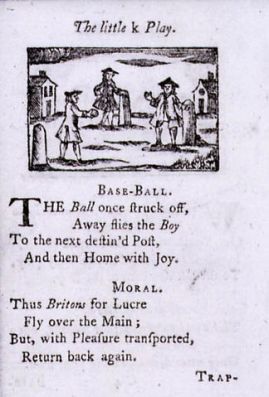 (This is also the first mention of the game of baseball, for all aficionados out there)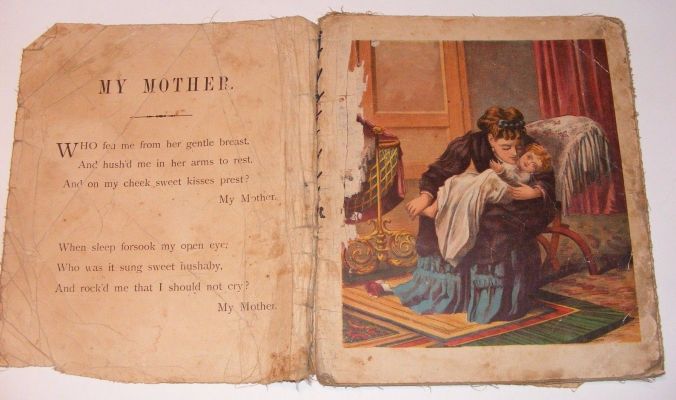

 Retoldtales